Swiss made, Geneva provenance and the Geneva Seal
What the texts require, and where the work has to be done.
Ask a question →Three claims come up whenever a watch speaks about its origin. Swiss made, Geneva, and the Geneva Seal. They rest on different legal bases, and one does not follow from another. This page sets out the official texts, article by article, with links to the sources. We are a watch subcontracting workshop in Plan-les-Ouates, and this is the question our clients ask us most often. It is not legal advice.
What Swiss made requires of a watch
The rule sits in a federal ordinance, the ordinance governing the use of the name Swiss for watches, RS 232.119. Article 1a sets five conditions, and they are cumulative.
- 01Technical development in Switzerland for a mechanical watch, at least the mechanical construction and prototyping of the whole
- 02A Swiss movement as defined in article 2 of the same ordinance
- 03Casing-up in Switzerland the movement is cased on Swiss territory
- 04Final inspection in Switzerland carried out by the manufacturer
- 0560 % of the manufacturing cost generated in Switzerland at minimum
The 60 % threshold has applied since 1 January 2017. The technical development requirements since 1 January 2019. Both come from the revision of 17 June 2016.
The cost calculation is not open-ended. Article 2c states what is excluded, and nothing else. Out of the calculation go packaging, transport, marketing costs including after-sales service, the cost of the battery, natural products that cannot be produced in Switzerland, and materials not available there in sufficient quantity. Everything else counts.
The case has its own criteria
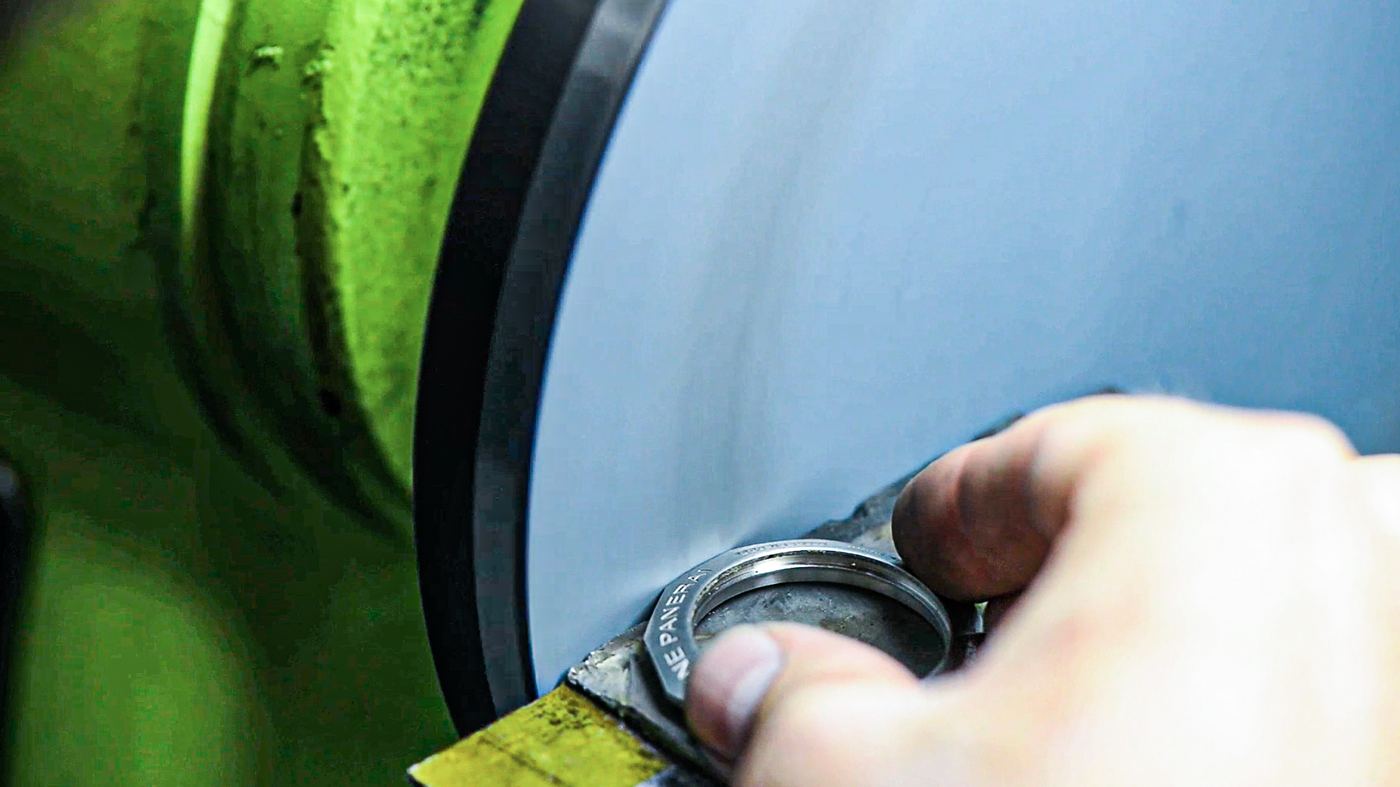
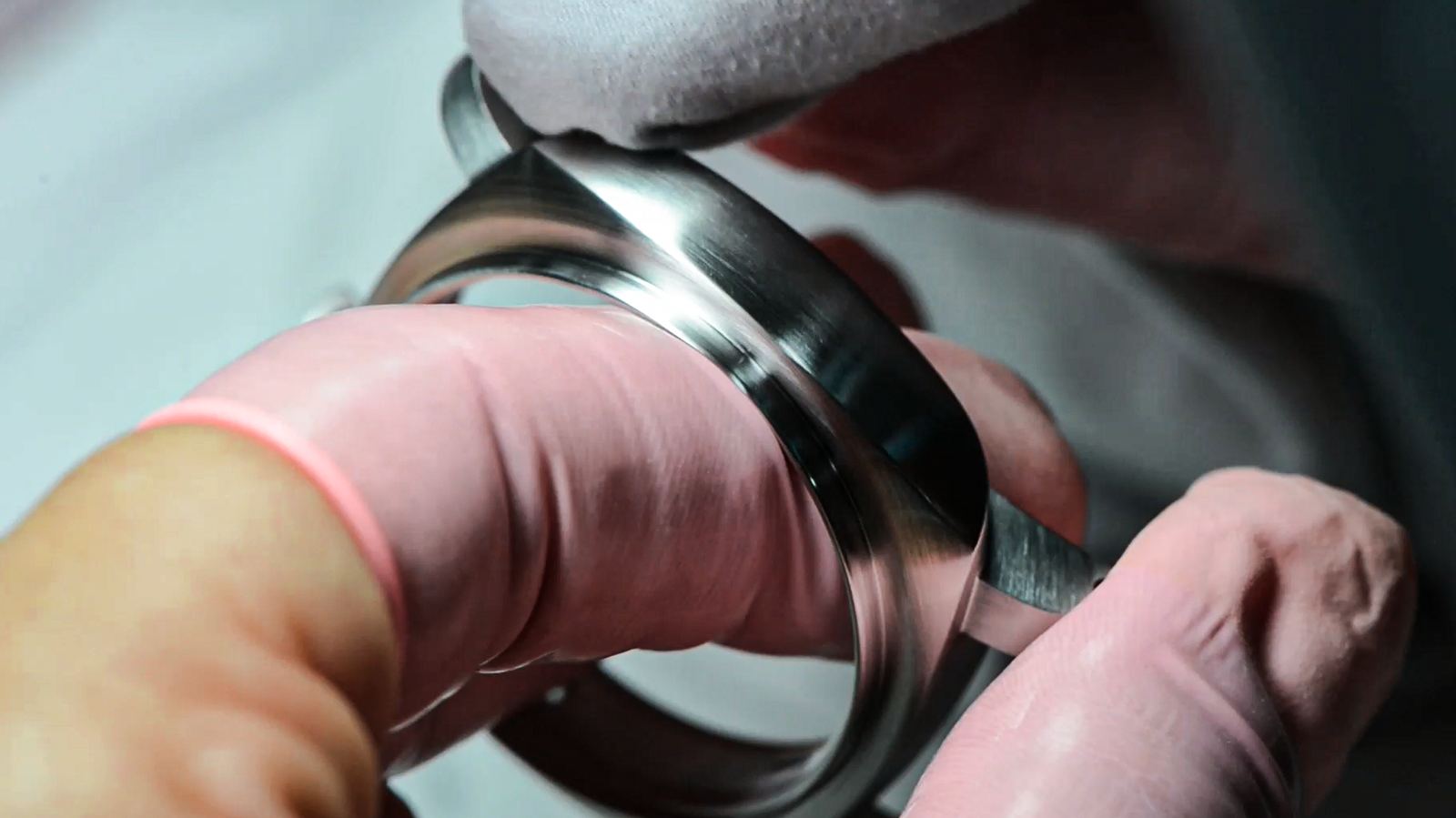
The case is dealt with separately, at article 4. It is Swiss if it has undergone at least one essential manufacturing operation in Switzerland, if it was assembled there, if it is inspected there, and if at least 60 % of its manufacturing cost is generated there. The text names the three essential operations, stamping, machining and polishing.
Printing Geneva on a dial
Swiss made has its own ordinance. A Geneva claim does not. It falls under the general regime of the Trade Mark Protection Act, known as the LPM.
The definition at article 47(1) is broad. An indication of source is any direct or indirect reference to the geographical origin of a product. Geneva on its own is one.
Article 48(1) then refers to articles 48a to 48c. For an industrial product, article 48c(1) locates the source where at least 60 % of the manufacturing cost is generated. Paragraph 4 adds two requirements. The indication must correspond to the place where the activity that gave the product its essential characteristics took place, and in every case a significant manufacturing step must have been carried out there.
For a watch claiming Geneva, the 60 % threshold is therefore calculated on the canton, not on Switzerland.
A registered office is not enough
It is often said that a company registered in Geneva and genuinely active there may print Geneva on its dials. That rule does exist, but it applies to services. Article 49(1) sets it out for services, and article 47(4) adds that regional or local indications of source applying to services are accurate if those services meet the country-wide criteria. For a product, article 48(1) refers without reservation to articles 48a to 48c.
Three provisions remain open and are argued case by case. Article 47(2) excludes geographical names that the relevant public does not read as a reference to source. Article 48d(b) allows a producer to show that the indication matches the understanding of that public. Article 47(3)(c) prohibits the use of a company name or address only where it creates a risk of deception. None of the three is an acquired right. Each one has to be demonstrated.
Made in Geneva is not stricter than Geneva
Both wordings fall under the same regime. Article 47(1) already covers any direct reference. Article 47(3bis) closes off qualifiers such as type, style or imitation. The only claim with a regime of its own is one referring to a specific activity, such as a design or research claim, and article 47(3ter) then requires the entirety of that activity to take place in the named location. In watchmaking, article 3(1bis) of the ordinance narrows that possibility further.
The burden of proof sits with whoever makes the claim
The LPM settles this at article 51a, headed reversal of the burden of proof. Whoever uses an indication of source must prove that it is accurate. There is no prior authorisation and no systematic control, but in a dispute you need to produce the line-by-line calculation and the documents behind it.
The Geneva Seal
The Geneva Seal is a voluntary official inspection resting on cantonal law. Since 2018 it has been governed by the law on Timelab, RSG I 1 25, which delegates the running of the Geneva Seal office to the Timelab foundation. The law speaks of a voluntary inspection of watches manufactured and assembled in the canton of Geneva.
On territory, the regulation is precise. The version in force since 1 January 2026 requires assembly, adjustment and casing-up of the movement and of any additional module plates, together with inspection of the finished watch head, to be carried out in the canton of Geneva. The applicant company must be established there.
The scope therefore goes beyond the movement. Casing-up and inspection of the finished watch are part of it. The regulation does not, however, require components to be manufactured in the canton, and the case must be approved without having to originate there.
Tests on the finished watch
Since 2011 the seal has covered the complete watch rather than the movement alone. Four checks, with their acceptance values.
- Water resistance3 bar under pressure and 0.5 bar under vacuum. The test is carried out in air.
- Rate accuracyno more than one minute after seven days, on a simulator, with day 0 and day 7 compared by a vision system.
- Functionsevery function of the watch checked over one cycle.
- Power reserveequal to or above the declared value, measured dial up.
The rate criterion is cumulative over seven days. No figure in seconds per day is published by the certifying body.
What changes when you outsource
All three regimes point to operations and to places. What matters is therefore where the work is carried out.
Our workshop is in Plan-les-Ouates, in the canton of Geneva, and every operation we run takes place there.
- Swiss casearticle 4 names polishing among the three essential manufacturing operations, and also requires assembly and inspection in Switzerland. We carry out all three.
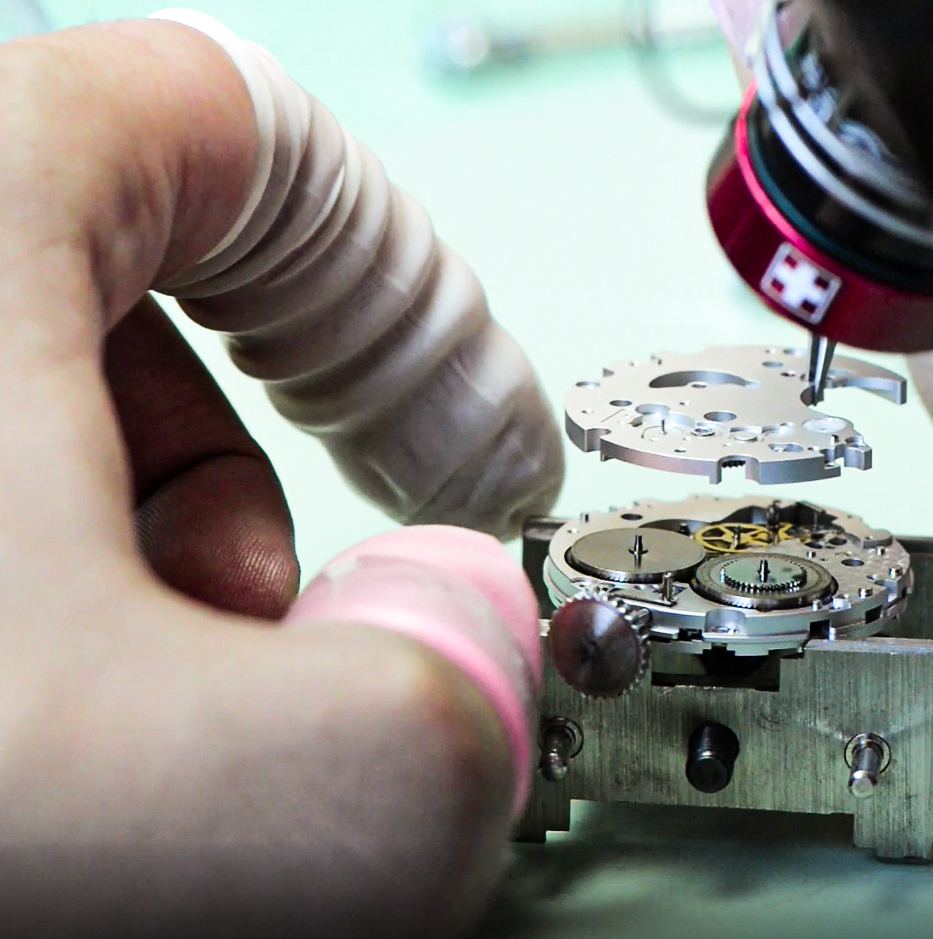
- Swiss watcharticle 1a requires casing-up and final inspection in Switzerland. We carry out both.
- Geneva Sealthe four operations the regulation ties to the canton are assembly, adjustment, casing-up and inspection of the finished watch head. All four are carried out in our workshop, and Timelab recommends keeping them with a single subcontractor.

Our inspection data
- Water resistancestandard test at 0.5 bar under vacuum and 3.0 bar under pressure. Higher values on request. Tests follow your specification.
- Rate toleranceset by you. Final inspection follows your specification.
- Materialssteel, titanium and precious metals.
- Lead timeone to two weeks for a straightforward watch placed in the flow. Beyond that, the lead time depends on the operation and the batch, and it is set in the quotation.
- Traceabilityevery batch has its own file, opened on receipt. The inspection report is available on request.
Where our role stops
We issue no certification and we hold none. The Geneva Seal is awarded by the Timelab foundation, on an application filed by the brand. Swiss made and any Geneva claim rest on your own declaration, and article 51a of the LPM places the burden of proof on you. What we bring is work carried out in the canton of Geneva and documented batch by batch, with the records to match.
Questions that keep coming up
Does Swiss made require every part to be made in Switzerland?
No. The ordinance does not require every component to be Swiss. It sets five conditions, including at least 60 % of the manufacturing cost generated in Switzerland, casing-up in Switzerland and final inspection in Switzerland. An imported component does not rule out Swiss made as long as the calculation holds.
What counts towards the 60 % manufacturing cost?
The ordinance does not list what counts. Article 2c lists what does not. Packaging, transport, marketing costs including after-sales service, the cost of the battery, natural products that cannot be produced in Switzerland and materials not available there in sufficient quantity are all excluded. Everything else enters the calculation.
Is a case polished in Switzerland a Swiss case?
Not on its own. Article 4 requires four things. At least one essential manufacturing operation in Switzerland, and polishing is one of the three named alongside stamping and machining. Assembly in Switzerland. Inspection in Switzerland. And at least 60 % of the manufacturing cost generated in Switzerland.
Can a company print Geneva on a dial because it is registered in Geneva?
The registered-office rule exists for services, under articles 49(1) and 47(4), not for goods. For a product, article 48(1) refers to articles 48a to 48c, so to the 60 % manufacturing cost threshold in the place named and to a significant manufacturing step carried out there. Counter-arguments exist, notably article 48d(b), but they rest on evidence, and the burden of proof lies with whoever uses the indication.
Are Made in Geneva and Geneva treated differently in law?
In terms of the applicable regime, no. Article 47(1) covers any direct or indirect reference, so Geneva on its own is already an indication of source. Adding Made in does not create a stricter category. The only claim with its own regime is one referring to a specific activity, and it requires the entirety of that activity to take place in the named location.
Who can apply for the Geneva Seal?
The inspection is voluntary and the law reserves it for no particular brand. The application is filed by the brand, including when it hands the operations to a subcontractor. The conditions are an establishment in the canton, movement approval, hallmarking, certification of the finished watch and regular audits. The seal is awarded by the Timelab foundation under delegation from the State of Geneva.
Can a brand hand the Geneva Seal operations to a subcontractor?
Yes. Asked in writing in September 2026, the Timelab foundation stated that the application is still filed by the brand. The operations can be split between several subcontractors, provided each one is entered in the Geneva commercial register and works within the canton. Timelab nonetheless recommends keeping them with a single one, for practical reasons. AVS social security certificates are not requested for every application. When they are, they must cover the staff who actually carry out the operations.
Do components have to be manufactured in Geneva for the Geneva Seal?
The regulation does not require it. It ties four operations to the canton, namely assembly, adjustment, casing-up and inspection of the finished watch head. The case must be approved, but it does not have to originate in the canton.
Does subcontracting cost you Swiss made?
No, provided the supplier is in Switzerland and the operations the ordinance locates in Switzerland are actually carried out there. Casing-up and final inspection are among them. The point to watch remains the 60 % calculation, which is done line by line.
Sources
- RS 232.119Ordinance governing the use of the name Swiss for watches. Text on Fedlex
- RS 232.11Federal Act on the Protection of Trade Marks and Indications of Source. Text on Fedlex
- RSG I 1 25Geneva cantonal law on Timelab, 21 September 2018. Text on the Geneva statute book
- Geneva Seal regulationversion in force on 1 January 2026. Official Geneva Seal site
- Swiss Federal Institute of Intellectual Propertyguidance on indications of source. IPI questions and answers
Page current as of 8 September 2026. It summarises official texts and cites its sources. It is not legal advice, and a specific project deserves the opinion of an intellectual property adviser.
A question about your project
Tell us what you need; we reply within one working day.
CLD Design SA · Chemin du Pré-Fleuri 15 · 1228 Plan-les-Ouates, Geneva
+41 22 794 37 64 · info@cld-design.com · IDE CHE-370.688.199