Outsourcing a watch brand’s after-sales service: what to settle before the first return
A brand that hands its after-sales service to an outside workshop keeps the warranty, the relationship with the buyer and the decision to repair. Before the first return, it needs to put in writing how parts are supplied, which customs procedure applies, what is checked before a watch goes back, the lead times and what the workshop may know about its customers. In Switzerland, the seller is liable to the buyer for defects, and a warranty claim is time-barred two years after delivery (Art. 197 and 210 CO).
What the brand keeps and what it hands over
Outsourcing after-sales means delegating workshop work. The commitment made to the buyer stays where it was: the brand, or the retailer that sold the watch, remains the customer’s point of contact, decides whether a repair is covered and sets the price of the work. The workshop diagnoses, repairs, checks and returns the watch.
| Subject | Stays with the brand | Handed to the workshop |
|---|---|---|
| Relationship with the buyer | Receiving the complaint, correspondence, handing back the repaired watch | No contact with the buyer, if the contract says so |
| Warranty | Terms and duration; whether a repair is covered under warranty | Technical findings written into the diagnosis |
| Decision to repair | Approval or refusal of the diagnosis and quote | Written diagnosis and list of proposed work |
| Price | Price charged to the buyer | Price of the work, invoiced to the brand |
| Work | Supply of parts, if the brand takes this on | Dismantling, repair, reassembly, regulation, inspection |
| File | Archiving; answering the buyer’s questions | Service report returned with the watch |
The approval rule is set before the first return: who at the brand accepts a diagnosis, through which channel, and what happens to a watch whose quote is refused (returned as it is, diagnosis charged or not). In our workshop, no work starts until the client has approved the written diagnosis.
Statutory warranty in Switzerland and the European Union
Under Swiss law, the seller is liable to the buyer for defects that negate or substantially reduce the value of the object or its fitness for its designated purpose, even if the seller was not aware of them1. The seller is the retailer when the watch was bought from one, and the brand when it sells direct. A buyer who discovers a defect must notify the seller without delay.
A warranty claim is time-barred two years after delivery, unless the seller has promised a longer period. Where a business sells to a consumer for personal or family use, a clause that cuts this period below two years, or below one year for a second-hand watch, is void1.
For movable goods such as a watch, the Code of Obligations gives the buyer no right to have the goods repaired. It provides for rescission of the sale or a price reduction and, where the sale is for a quantity of fungible goods, delivery of other goods of the same kind1. A repair under warranty is therefore whatever the brand promises in its own terms.
In the European Union, the official Your Europe portal summarises Directive (EU) 2019/771 as follows: the buyer is entitled to a guarantee of at least two years; the seller must first repair or replace the goods free of charge, and the buyer is entitled to a full or partial refund if that is not possible or if the seller cannot do it within a reasonable time and without significant inconvenience2. A brand that sells in the EU therefore needs a repair lead time it can keep, agreed with the workshop and written into the contract.
Spare parts, straps and gold parts
The brand decides who buys and stocks the parts. It can send them with each watch, keep a stock at the workshop or let the workshop buy them and recharge them. Whichever option it chooses, the contract states who pays for a missing part and how long a watch may wait for one. For movement parts, the brand checks before signing that its movement supplier will deliver them to the workshop it has chosen.
A case component that is no longer in stock (bezel, crown, caseback) has to be remade from its drawings. If the watch was developed elsewhere, the brand must be able to send the after-sales workshop the dimensioned drawings of the case. At CLD Design, a part to be remade is machined by our partner workshops in Plan-les-Ouates and checked when it arrives in our workshop, before finishing; when we developed the watch, its drawings are already with us.
Gold and other precious metals
All parts of a precious metal article must at least meet the fineness stated for the article; the Central Office for Precious Metals Control may make exceptions on technical grounds3. A replacement crown or bezel for a 750 gold case must therefore itself be at least 750 parts per thousand, unless the Central Office allows an exception. If a part of a case already hallmarked by an Assay Office is replaced, a new test and a new hallmark must be applied for, and the replaced pieces are presented to the Assay Office, which removes their hallmarks; finishing or polishing that removes or damages the hallmarks also calls for a new hallmark4. The contract should therefore say who takes the watch to the Assay Office. Fineness, the responsibility mark and official case hallmarking are covered in the article 18k gold watch cases: fineness, responsibility mark and official hallmarking in Switzerland.
Nickel
The Swiss ordinance on objects intended to come into contact with the human body names watch cases, watch straps and their clasps: they may not release more than 0.5 µg of nickel per cm² per week, and a coating must stay within that limit for two years of normal use5. A replacement strap or clasp is subject to the limit just as the original is. An object is presumed to comply if it meets the standards listed in annex 1 of the ordinance, SN EN 1811:2023 for the test method and SN EN 12472:2021 for coated objects5: that is the evidence to ask the strap supplier for.
Getting a foreign brand’s watches in and out of Switzerland
Since 1 January 2024, Switzerland has charged no customs duties on industrial products in chapters 25 to 97 of its tariff, except for some products in chapters 35 and 386. Watches fall under chapter 917. A watch sent from abroad for repair must nevertheless be declared on the way in and on the way out, and import VAT remains to be dealt with.
The inward processing procedure covers the temporary importation of goods for treatment, processing and repair. The Federal Office for Customs and Border Security (FOCBS) describes it as unnecessary for goods that are duty-free under the tariff, or where the full amount of the import tax can be claimed as input tax: the goods are then declared under the general provisions8.
The VAT Act also exempts from import tax goods temporarily imported to be processed under a work and labour contract by a person registered for VAT in Switzerland, when they are assessed under inward processing with the suspensive procedure (Art. 53 para. 1 let. j VAT Act)9. For a repair, the customs office grants the authorisation by accepting the customs declaration under the simplified procedure; it sets an export deadline, usually twelve months, and the import charges remain secured until the procedure is discharged10.
Which of the two routes applies depends on the VAT status of whoever declares the watches. It is settled with the freight forwarder before the first shipment, along with the name of the declarant, the customs office and the documents that travel with the watch in each direction.
Watches in precious metal cases
A watch with a precious metal case also comes under precious metals control legislation: articles governed by it must be declared on import and reported to the relevant Assay Office, and the same applies on export4. The chapter of the ordinance on import and export sets out no specific procedure for a watch that enters only to be repaired. The procedure should therefore be confirmed with the Central Office for Precious Metals Control before the first shipment.
Back into the European Union
On the EU side, outward processing requires an authorisation. The European Commission states that it gives total relief from import duties for goods exported merely to be repaired free of charge because of a contractual obligation or because of a manufacturing or material defect; in other cases, the duties are calculated only on the value resulting from the processing carried out outside the EU11. These formalities fall to the brand, in its own country, and need to be in place before the first watch is shipped.
What is checked before the watch goes back
ISO 22810, in its 2010 edition confirmed at its last review in 2021, notes in its introduction that the quality and permanence of the protection against water depend in particular on how soundly the case is built, how well it is made and the watch’s history, including servicing and shocks12. A watch opened in after-sales therefore goes through a water resistance test again before it leaves.
The standard sets out the tests to be applied in the event of a dispute and leaves it to the watch’s manufacturer, in this case the brand, to define its production tests and its warranty conditions12. It is up to the brand to write down, for its after-sales service, the water resistance test values, the rate tolerance, the functions to check and what the service report must contain. The standard’s tests are explained in the article Watch water resistance: what ISO 22810 and ISO 6425 require.
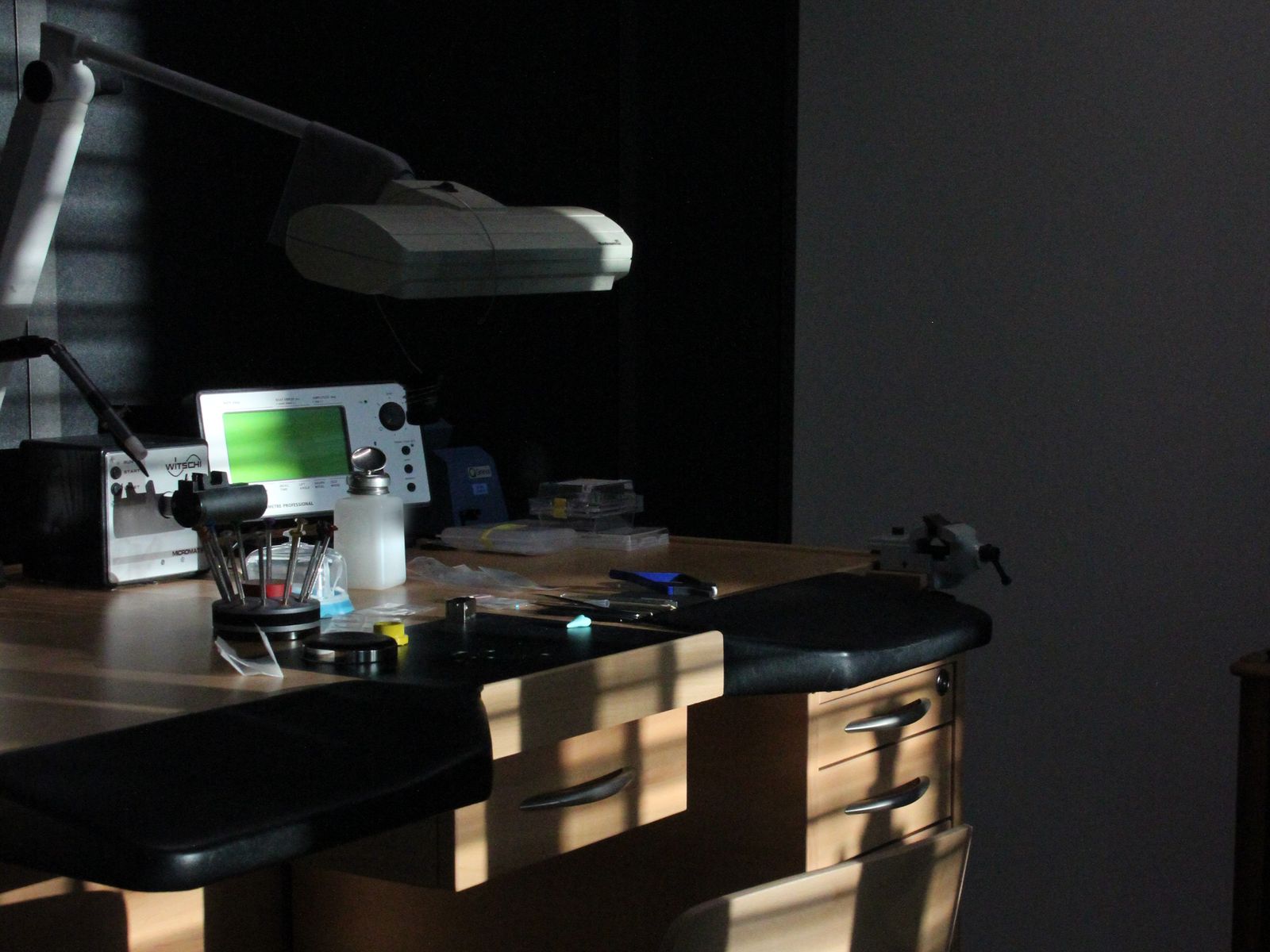
In our workshop, every watch leaves after adjustment of its functions, regulation of its rate and an instrumented water resistance test, with a service report; the rate tolerance is the one set by the client. The standard test values of our final inspection are given on the page Watch subcontracting in Geneva, final inspection.
What the after-sales contract should set out
The points below are settled before the first return; the values chosen depend on each brand’s volumes and watches.
| Point | What the contract sets out |
|---|---|
| Receipt | Shipping address, delivery note with each watch, photographic inventory on arrival |
| Diagnosis | Time between receipt and the written diagnosis; content of the diagnosis |
| Approval | Who approves at the brand, through which channel; what happens to a watch whose quote is refused |
| Turnaround | Time between approval and return; what happens if it is exceeded |
| Parts | Who supplies and stocks them, at what price; acceptable wait for a missing part; for gold, who presents replaced parts to the Assay Office |
| Outgoing inspection | Water resistance tests, rate tolerance, functions checked, content of the report |
| Comebacks | A watch that returns with the same fault: who pays, and how quickly it is taken back |
| Transport and insurance | Who insures the watch in transit and while it is at the workshop |
| Customs | Declarant, procedure, documents on the way out and on the way back |
| Confidentiality | Non-disclosure agreement, whether buyer data is passed on, use of third parties |
Three indicators follow from this table: time to diagnosis, time to return and the share of watches that come back with the same fault. The contract states how each one is calculated and how often the workshop reports it.
Confidentiality towards the end customer
For the buyer, the brand remains the point of contact. CLD Design appears neither on the documents given to the end customer nor in any exchange with them; we do not name our clients, and we sign a non-disclosure agreement on request.
The buyer’s name, address and telephone number are personal data under the Federal Act on Data Protection. A workshop that processes them on the brand’s behalf is, in the terms of that Act, a processor. The brand may assign this processing to it by contract if the workshop processes the data only in the way the brand itself is permitted to, and if no statutory or contractual duty of confidentiality prohibits it; the brand must satisfy itself that the workshop can guarantee data security, and the workshop may only pass the processing on to a third party with the brand’s prior approval13.
If the workshop does not write to the buyer, it has no need for the buyer’s identity: a job number is enough to track the watch from receipt to return, and only the brand holds the link between that number and its customer. A brand based outside Switzerland also applies the law of its own country.
Frequently asked questions
Who is liable to the buyer for a defect when after-sales is outsourced?
The seller: the retailer if the watch was bought from one, the brand if it sells direct (Art. 197 of the Code of Obligations). What the workshop owes the brand if its work is faulty is set out in their contract.
Are customs duties payable to have a foreign brand’s watches repaired in Switzerland?
Not in Switzerland: since 1 January 2024, it has charged no customs duties on industrial products, watches included. Import VAT remains: depending on the declarant’s VAT status, the watch enters under inward processing or under the general provisions. On the way back, the brand’s country applies its own rules; in the EU, a free repair owed under a contractual obligation or because of a manufacturing defect can be relieved of duty under outward processing.
Does the cost of after-sales service count towards the Swiss made calculation?
No. The ordinance on the use of “Switzerland” or “Swiss” for watches excludes commercialisation and marketing costs, including customer service, from the manufacturing costs (Art. 2c); our page Swiss made, Geneva provenance and the Geneva Seal (Poinçon de Genève) explains the other conditions.
Does the after-sales workshop need to know the buyer’s name?
Not if it does not correspond with the buyer: a job number is enough to track the watch. If it does receive that data, it processes it as the brand’s processor under the Federal Act on Data Protection (Art. 9 FADP).
Sources
- SR 220, Code of Obligations, Art. 197, 201, 205, 206 and 210 (status as of 1 January 2026). English translation on Fedlex accessed 29 September 2026
- Your Europe, official portal of the European Union, “Guarantees on goods bought in the EU”, summary of Directive (EU) 2019/771 on contracts for the sale of goods. Page on europa.eu accessed 1 October 2026
- SR 941.31, Precious Metals Control Act (PMCA), Art. 7 para. 2 (status as of 1 July 2023). English translation on Fedlex accessed 29 September 2026
- SR 941.311, Precious Metals Control Ordinance (PMCO), Art. 121, 122, 130 and 137 (status as of 1 January 2024). English translation on Fedlex accessed 29 September 2026
- SR 817.023.41, FDHA Ordinance on objects intended to come into contact with the mucous membranes, skin or hair (OCCH), Art. 2 and annex 1 (status as of 15 September 2025). Text on Fedlex (French) accessed 29 September 2026
- FOCBS, “Abolition of industrial tariffs”. Page on bazg.admin.ch accessed 29 September 2026
- FOCBS, explanatory notes to the customs tariff, chapter 91 “Horlogerie” (status as of 1 October 2024). PDF on bazg.admin.ch (French) accessed 29 September 2026
- FOCBS, “Inward processing traffic”. Page on bazg.admin.ch accessed 29 September 2026
- SR 641.20, Value Added Tax Act (VAT Act), Art. 53 para. 1 let. j (status as of 31 March 2025). English translation on Fedlex accessed 29 September 2026
- FOCBS, regulation R-10-70, “Perfectionnement actif” (inward processing), sections 2, 5.2 and 8.3 to 8.5 (version of 1 February 2026). PDF on bazg.admin.ch (French) accessed 29 September 2026
- European Commission, DG Taxation and Customs Union, “Exportation”, “Outward processing” section. Page on europa.eu accessed 1 October 2026
- ISO 22810:2010, Horology, Water-resistant watches, introduction; edition confirmed in 2021. Page on iso.org accessed 29 September 2026
- SR 235.1, Federal Act on Data Protection (FADP), Art. 5 let. a and k, and Art. 9 (status as of 7 July 2025). English translation on Fedlex accessed 29 September 2026
- SR 232.119, Ordinance of 23 December 1971 on the Use of “Switzerland” or “Swiss” for Watches, Art. 2c let. e. English translation on Fedlex accessed 29 September 2026
This article summarises official texts and cites its sources. It is not legal, tax or customs advice: the procedure that applies to your shipments should be confirmed with the FOCBS or your freight forwarder.