
Watch case polishing and finishing in Geneva
In our workshop in Plan-les-Ouates, Geneva, we carry out jewellery work and polishing on watch case components: laser spot welding and build-up, soldering, casting rework and fitting, followed by mirror polishing, satin-finishing, sandblasting, hammering or a mixed polished and brushed finish. We work with steel, titanium and precious metals, on one-off pieces and production runs. Each operation can be ordered on its own or as part of a complete watch project.
Finishing comes between the machining of the components and case assembly. The table shows who does what at each step of a complete project.
| Step | What is done | Carried out by |
|---|---|---|
| Machining | Case components machined to the project drawings. | Partner workshops, Plan-les-Ouates |
| Incoming inspection | Parts checked on arrival in our workshop and the batch file opened. | CLD workshop |
| Jewellery work | Laser spot welding and build-up, torch and belt-furnace soldering, casting rework, fitting. | CLD workshop |
| Polishing and finishing | Mirror polish, satin-finishing, sandblasting, hammered finish, mixed polished and brushed finish. | CLD workshop |
| Cleaning | Ultrasonic cleaning after polishing. | CLD workshop |
| Case assembly | Crystal, crown, caseback and bracelet; each component is checked before it is fitted. | CLD workshop |
Jewellery work on the case
Jewellery work (bijouterie horlogère) prepares and repairs the metal before it is finished. With the laser, we spot-weld parts together and build up material where it is missing. We also solder with a torch and in a belt furnace, rework cast parts, and fit and repair case components. The laser welding station is fitted with a stereo microscope.
Jewellery work and polishing are done in the same workshop, so a part reworked with the laser goes on to polishing without leaving it.

Polishing and finishing
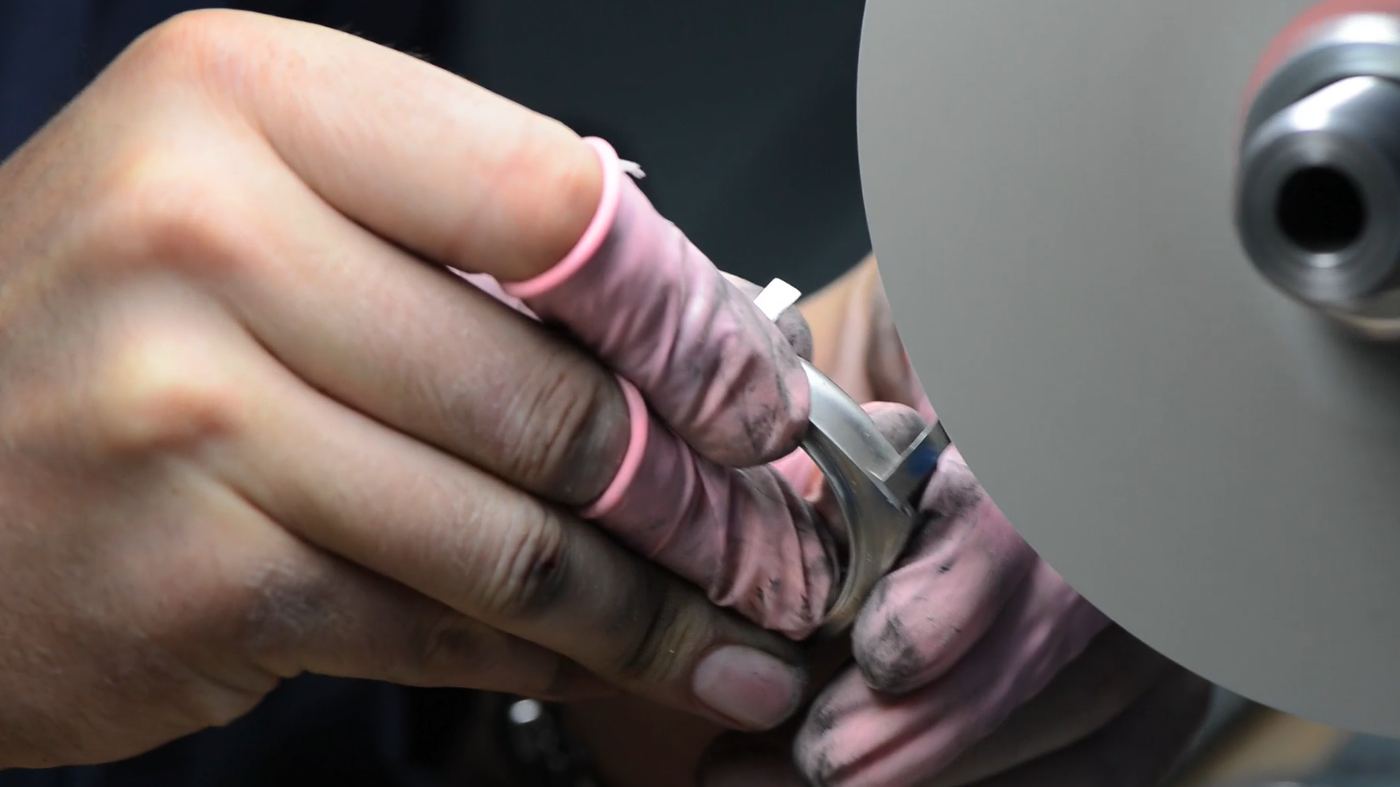
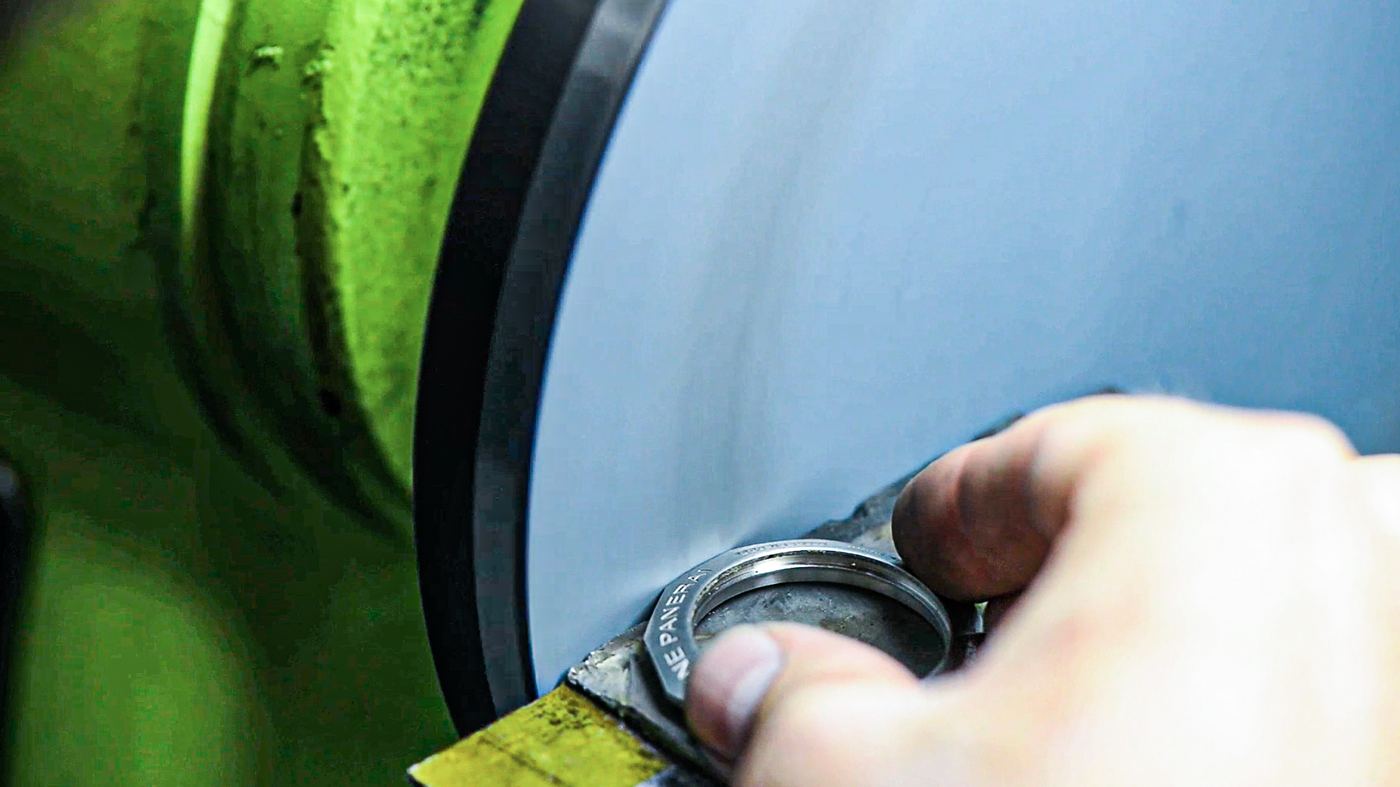
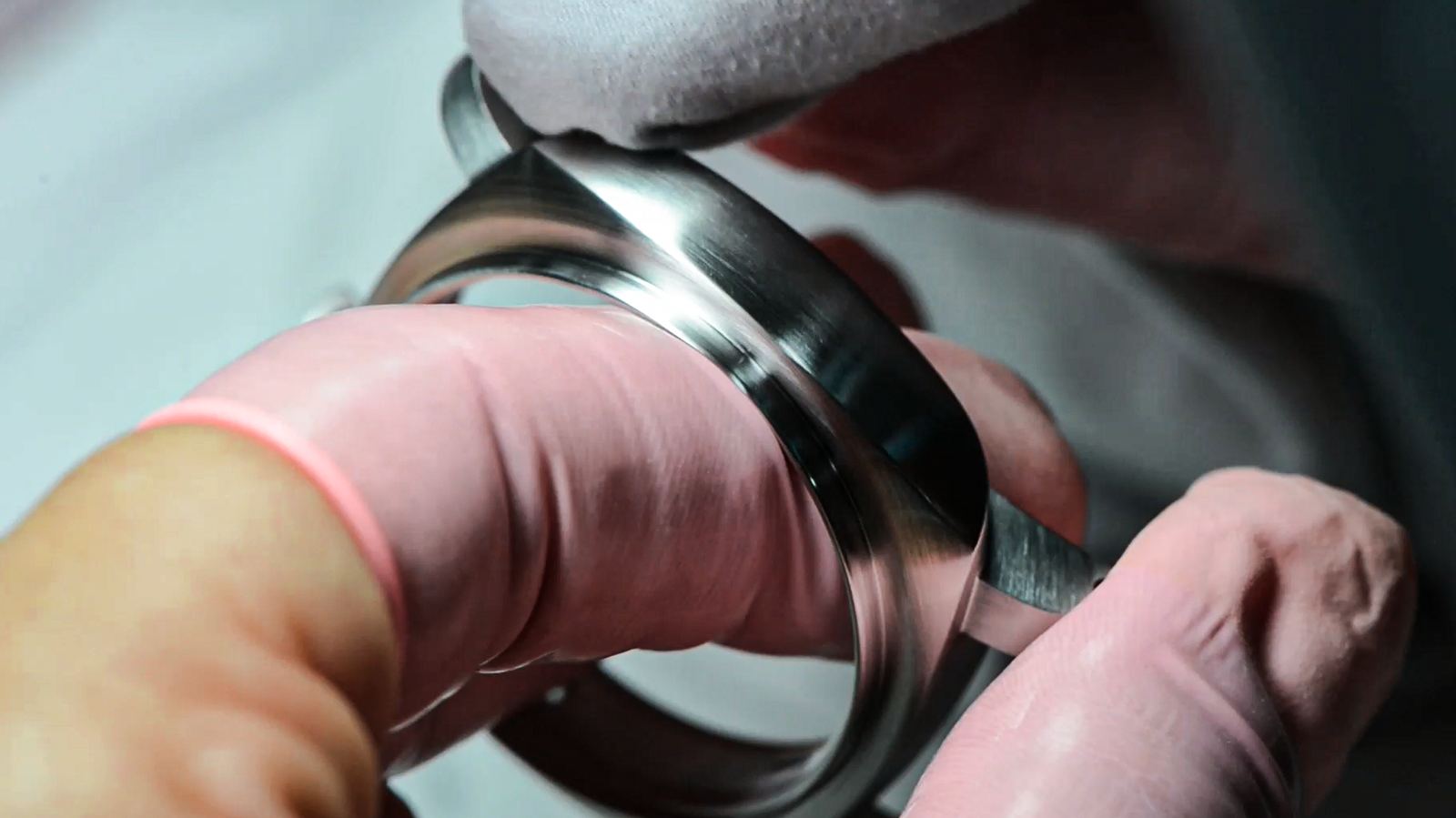
We polish all case components, including deep recesses and complex geometries. The table below defines each finish.
| Finish | Definition |
|---|---|
| Mirror polish | A perfect polish, with no spots or scratches. |
| Satin-finishing | A matt surface marked with fine lines. |
| Sandblasting | A matt surface obtained by blasting an abrasive onto the part at high speed. |
| Hammered finish | A surface worked by striking it lightly and repeatedly with a hammer. |
| Mixed polished and brushed finish | Polished areas and brushed areas on the same part. |
Mirror polish, satin-finishing, sandblasting and hammering: definitions based on the Dictionary of Horology published by the Federation of the Swiss Watch Industry FH, successor to the Berner dictionary.
When we engineer the case for a project, the drawings leave allowances for the material that polishing will remove, as explained on our case design and engineering page. To specify a finish on a drawing, read our article Specifying watch case finishes, from mirror polish to sandblasting.
Ultrasonic cleaning
After polishing, the parts go through ultrasonic cleaning. In the tank, microscopic bubbles implode in the smallest recesses of the part and loosen the dirt from it.
In a complete project, the cleaned part then moves on to case assembly.
Materials and batches
We work with steel, titanium and precious metals. Two journal articles help with the choice: Choosing a watch case material: 316L, 904L, titanium, gold, ceramic and, for gold, 18k gold watch cases: fineness, responsibility mark and official hallmarking in Switzerland.
Refinishing in after-sales service
On a watch in for after-sales service, nothing is started until the client has approved the written diagnosis. The case components are then cleaned ultrasonically before any rework, and polishing or satin-finishing rework is done in our workshop.
If a component has to be remade, it is machined by our partner workshops in Plan-les-Ouates, then finished here. If we developed the watch, its drawings are already on file with us.
The client keeps the customer relationship and the warranty. The full process is described on our watch after-sales service page.
Frequently asked questions
Can I send you parts machined elsewhere for finishing only?
Yes, on parts machined by the workshop of your choice. They are logged on arrival, like every batch we receive.
Who machines the parts in a complete project?
Our partner workshops in Plan-les-Ouates, working to our order; we are answerable for their work. The parts then come to our workshop, where they are checked before they go on to jewellery work or polishing.
How should I specify the finish I want?
On the drawing or in the specification, area by area. Our article “Specifying watch case finishes, from mirror polish to sandblasting” explains how to write it.
What is the lead time for a batch?
It depends on the operation and the size of the batch. We set it in the quote and confirm it when the order starts.
Does polishing count towards Swiss made?
For the case, yes: Article 4 of the Ordinance on the Use of “Switzerland” or “Swiss” for Watches (SR 232.119) names polishing, with stamping and machining, among the essential manufacturing operations for a Swiss watch case. Our Swiss made page explains what this text requires of the case and of the watch.
Let's discuss
your project.
Tell us about the part, its material and the finish you want. We sign a non-disclosure agreement on request before any technical discussion.
Chemin du Pré-Fleuri 15
1228 Plan-les-Ouates
Switzerland