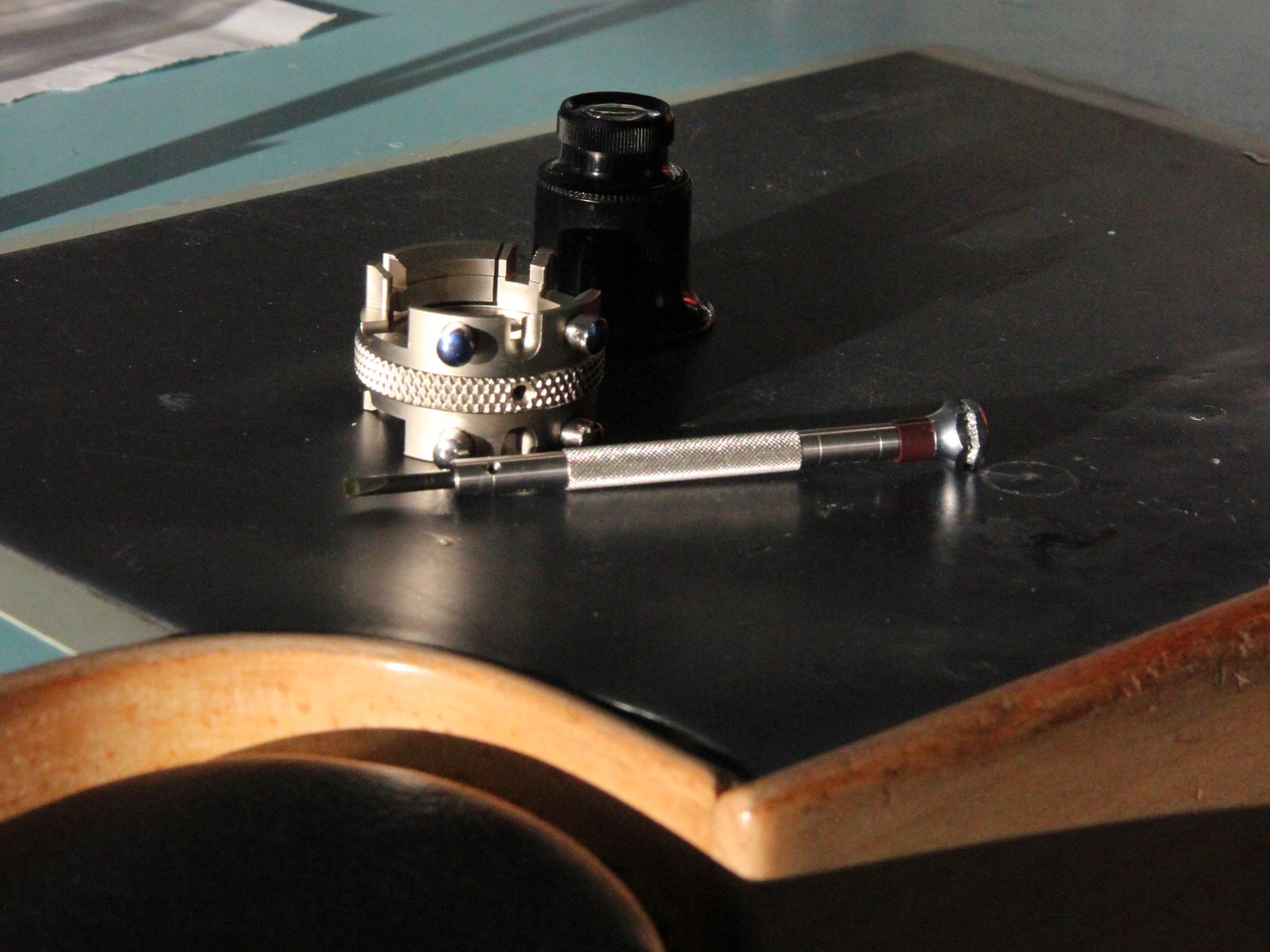
Watch case design and engineering
CLD Design SA designs and engineers watch cases in Plan-les-Ouates, Geneva: aesthetic design, CAD engineering with dimensioned drawings and 3D files for machining, and rework of a brand’s own drawings to make them manufacturable. We work on the case, bezel, caseback and crown, never on the movement.
Where we start depends on what the brand brings.
| Service | Starting point | What you receive |
|---|---|---|
| Aesthetic design | An idea or a brief from the brand | Sketches and 3D renderings: shapes and finishes of the case |
| CAD engineering | The chosen design and the selected movement | Dimensioned drawings and 3D files for machining the case, bezel, caseback and crown |
| Reworking drawings | The brand’s own drawing or plans | A manufacturable design: dimensions, tolerances, water resistance |
Each of them can also be the starting point for developing a complete watch, from drawing to after-sales service.
Aesthetic design
Aesthetic design sets how the case looks: the shape of the case middle and lugs, the bezel, the caseback, the crown and the finish of each surface. We present it as sketches and 3D renderings.
The material is chosen early, because the engineering and the possible finishes depend on it. We work in steel, titanium and precious metals. Our article Choosing a watch case material: 316L, 904L, titanium, gold, ceramic compares these metals with other options.
On the renderings, each surface carries its finish: mirror polish, satin-finishing, sandblasting, hammering or a mixed polished and brushed finish. Our article Specifying watch case finishes, from mirror polish to sandblasting describes each one. When the project continues with us, these finishes are carried out by our polishing and finishing workshop.
Engineering begins once the brand has approved the design.
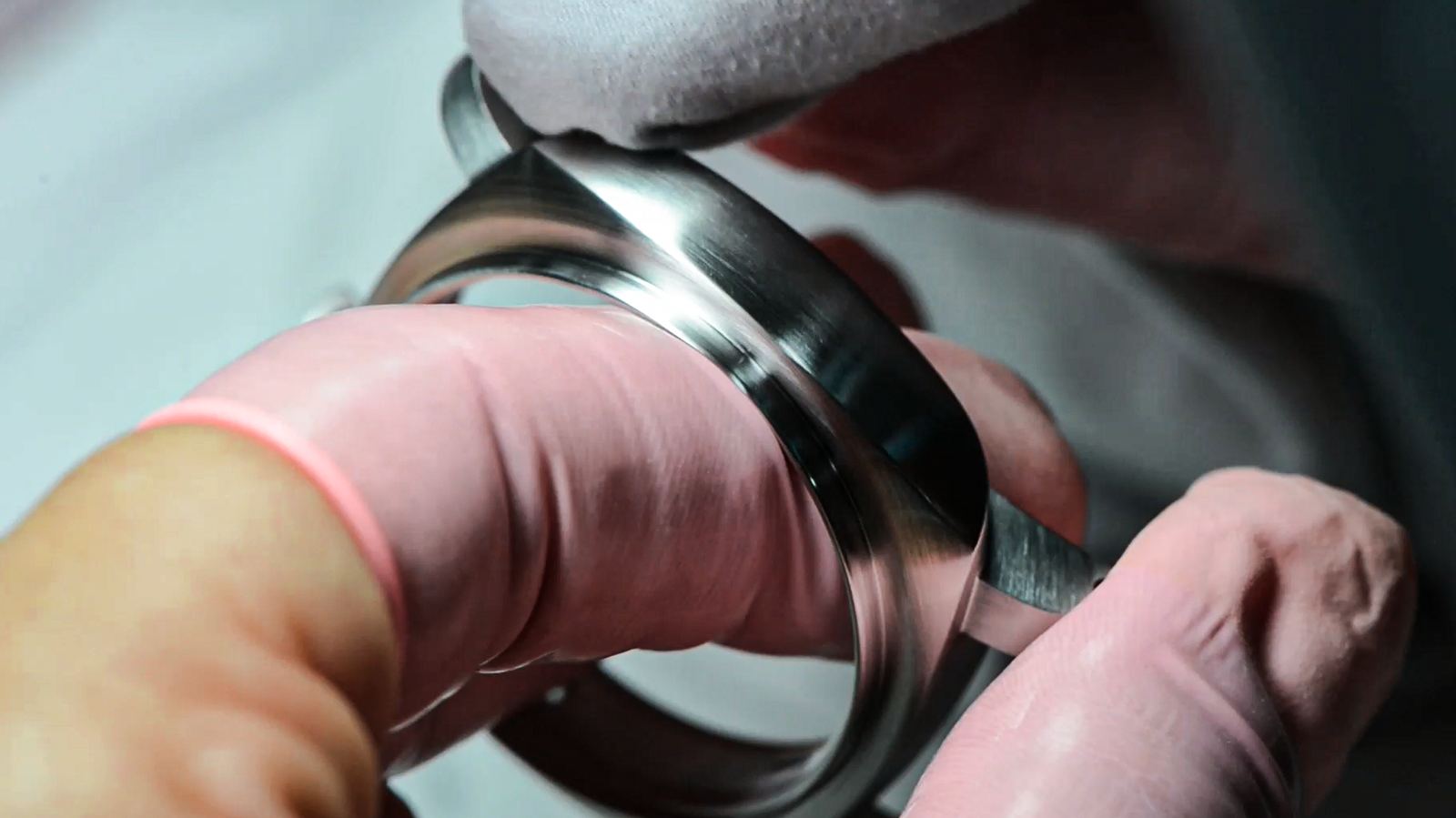
CAD engineering and dimensioned drawings
Engineering turns the design into drawings that a machining workshop can work from. In watchmaking this is the work of a design office, and ours is in Plan-les-Ouates. For the case, bezel, caseback and crown, we deliver dimensioned drawings and 3D files for machining.
Dimensions and tolerances
Every dimension that matters for assembly carries its tolerance: the fit of the bezel, crystal and caseback on the case middle, and where the crown passes through the case middle.
Water resistance
The engineering defines the gasket seats and how the caseback and crown are sealed. When the watch is assembled with us, an instrumented water-resistance test is part of final inspection. Our article Watch water resistance: what ISO 22810 and ISO 6425 require sets out the two standards.
Allowances for polishing
Polishing removes material. On surfaces that will be polished or satin-finished, the drawing therefore leaves an allowance, so that the part reaches its final dimension once finished.
From drawings to machining
Machining is carried out by our partner workshops in Plan-les-Ouates. We order it from our drawings and we are answerable for it; parts are checked on arrival in our workshop, before finishing. The details are on the prototyping, industrialisation and machining page.
If we developed the watch, its drawings are already here the day it comes back for after-sales service.
Reworking a brand’s drawings
A brand sometimes arrives with a design already drawn, by its own designer or by an outside studio. That drawing sets how the watch looks. Before it can be machined, it still needs dimensions, tolerances and engineering for water resistance.
We rework it to make it manufacturable. You receive the same deliverables as after an engineering job: dimensioned drawings and 3D files for machining.
When a shape has to change for the part to be made, for example a case middle too thin for the chosen movement, the brand decides.
What a subcontractor needs to receive is set out in our article on watch case specifications.
We do not design
movements.
The case is engineered around an existing movement.
The movement
It comes from a movement supplier. You choose it, or we look for that supplier with you.
The case
Its drawings start from the dimensions of the chosen movement: diameter, height, position of the winding stem.
Dial, hands, crystal
These are bought-in components too. We look for their suppliers.
Assembly
The movement is assembled and cased in our workshop, from the bare movement to the complete sub-assembly with dial and hands fitted.
Where this work must be done for Swiss made
For an exclusively mechanical watch, the Ordinance on the Use of 'Switzerland' or 'Swiss' for Watches (SR 232.119, art. 1a, let. a) requires at least the mechanical construction and the prototyping of the watch as a whole to be carried out in Switzerland. When you entrust the case engineering to us, it is done in Plan-les-Ouates.
Frequently asked questions
Can I bring my own watch design?
Yes. We rework a brand’s drawing to make it manufacturable: dimensions, tolerances and water resistance. If a shape has to change for the part to be made, the brand decides.
Can you engineer the case around a movement I have already chosen?
Yes. The case is engineered around the dimensions of the chosen movement. If the movement has not been chosen yet, we look for the supplier with you.
Can I order only the design or the drawings?
Yes. Each step can also be ordered on its own. If you wish, the project continues with us through to final inspection and after-sales service.
Where is the engineering done?
At our offices in Plan-les-Ouates, Geneva. Machining is carried out by our partner workshops in Plan-les-Ouates; parts are checked in our workshop on arrival.
How long does it take to design and engineer a case?
The schedule is set in the quotation, phase by phase. It depends on what the brand brings at the outset.
Does my design stay confidential?
We sign a non-disclosure agreement on request before any technical discussion. No client brand is named, on this site or in our sales discussions.
After the drawings: prototypes and industrialisation
The drawings are tested on prototypes: first parts, assembly and finishing trials before series production. Prototypes are assembled and fine-tuned in our workshop. Our prototyping page also covers the search for materials and suppliers, then industrialisation: pre-series, manufacturing routings, inspection plans and the move to series production.
Prototype techniques are compared in Watch case prototypes: wax, resin or machined metal?
Let's discuss
your project.
Tell us about your project and what you already have. We sign a non-disclosure agreement on request before any technical discussion.
Chemin du Pré-Fleuri 15
1228 Plan-les-Ouates
Switzerland