Watch prototyping, development and industrialisation
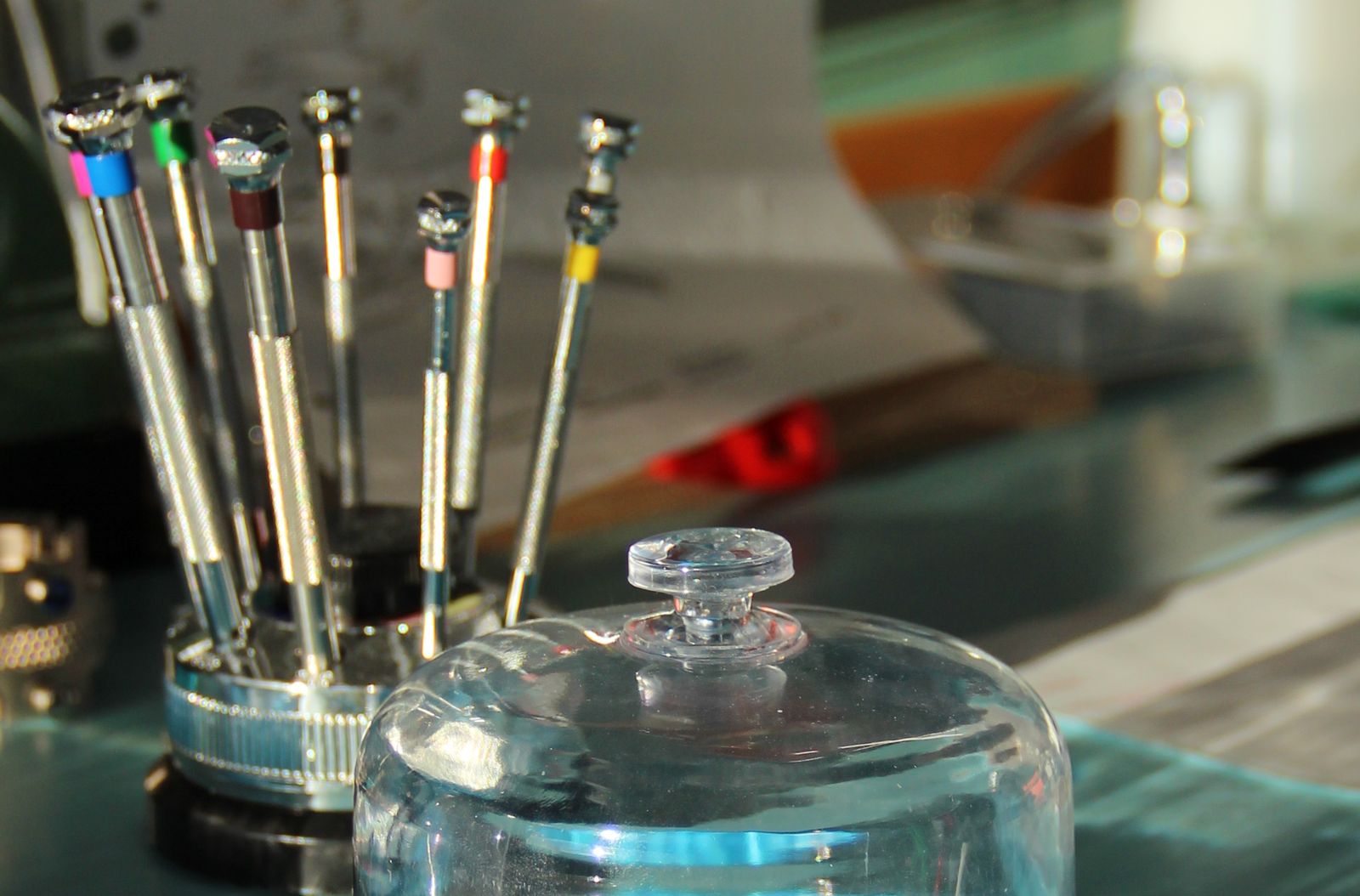
Between the drawings and series production, we handle a watch’s prototypes, technical development, choice of materials and suppliers, and industrialisation in-house, in Plan-les-Ouates. Prototypes are assembled and fine-tuned in our workshop; machining is carried out by our partner workshops in Plan-les-Ouates.
The work that comes before, designing the case and drawing up its plans, is described under watch case design and engineering. The whole project, from the first drawing to after-sales service, is set out under Swiss watch development in Geneva.
| Step | What is done | Carried out by |
|---|---|---|
| Prototypes | First parts assembled; assembly and finishing trials before series production. | CLD workshop |
| Technical development | Water resistance, tolerances, bonding, fit between components. | CLD workshop |
| Materials and suppliers | Steels, titanium, gold, sapphire and treatments; sourcing suppliers of movements, dials and hands. | CLD workshop |
| Industrialisation | Manufacturing routings, inspection plans, pre-series, move to series production. | CLD workshop |
| Machining | Parts machined to the drawings, checked on arrival in our workshop. | Partner workshops, Plan-les-Ouates |
Each step can also be ordered on its own.
Watch prototypes, assembled in our workshop
Prototypes are the first parts of the watch, made to the drawings. They are used for assembly and finishing trials before series production, and we assemble them in our workshop in Plan-les-Ouates.
The assembly trial checks that the components fit together as the drawings intend: crystal, bezel, caseback, crown and strap on the case middle. The finishing trial checks that the chosen mirror polish, satin-finishing or blasting can be achieved on the shapes as drawn, edges and deep areas included.
Whatever the trials reveal, such as too much play or a surface the polishing cannot reach, is corrected on the drawings before series production.
Wax, resin or machined metal: the prototyping techniques for a watch case are compared in our article on watch case prototypes.
Technical development
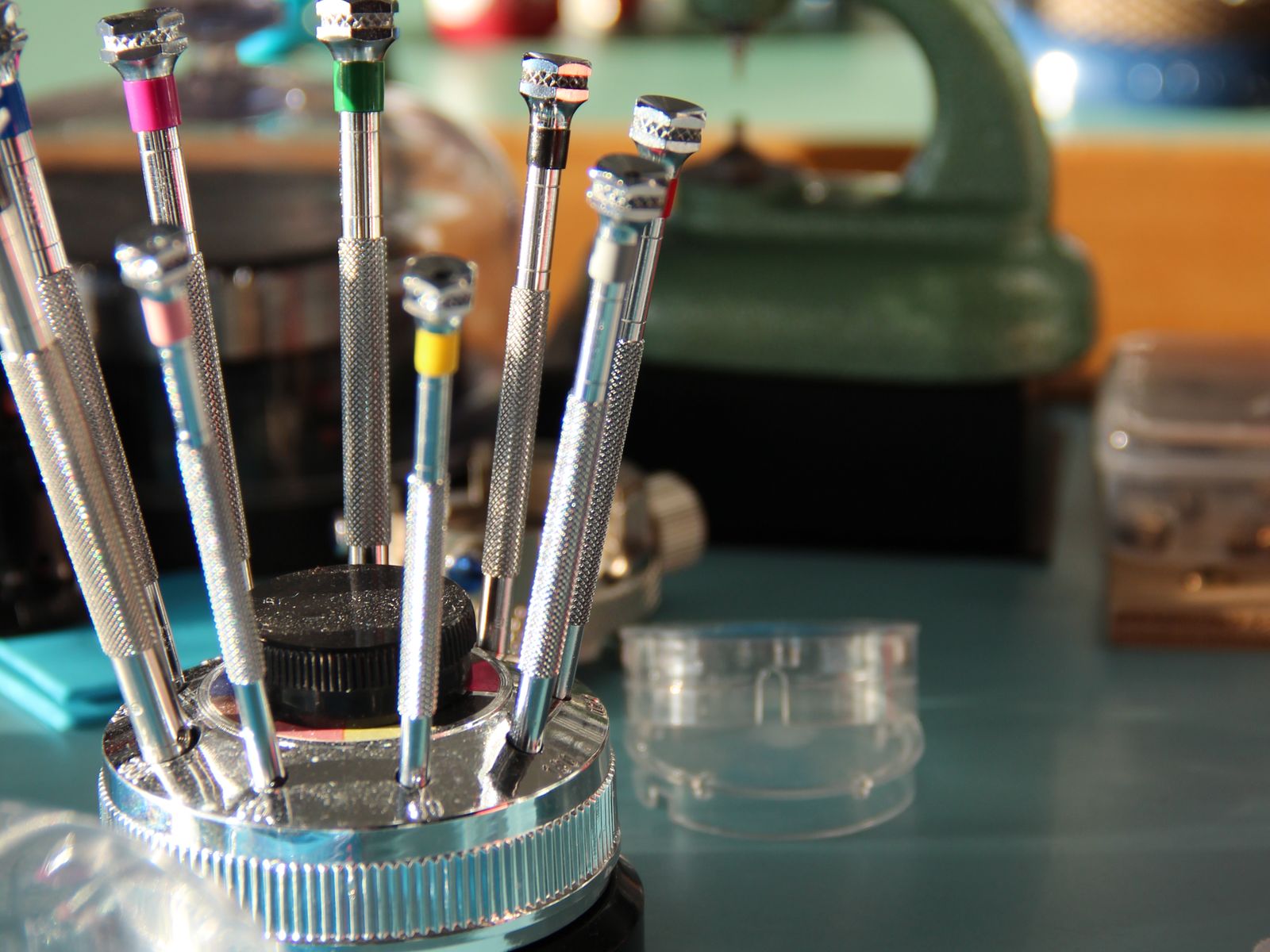
Technical development is done on the prototypes, in our workshop. It covers four points.
- 01Water resistance assembled case, checked with an instrumented water-resistance test
- 02Tolerances play and fits between the case middle, bezel, caseback and crown
- 03Bonding sapphire or mineral crystal, UV adhesive or oven curing at a controlled temperature, checked under the stereo microscope
- 04Fit between components components checked before they are fitted, then tightened to the required torques
The values of our standard water-resistance test are given with our final inspection, and the standards are summarised in our article on watch water resistance under ISO 22810 and ISO 6425.
Materials and suppliers
Materials and their treatments are chosen during development: steels, titanium or gold for the case, sapphire for the crystal. Our workshop handles steel, titanium and precious metals in jewellery work and polishing, so the material is chosen knowing how the part will be finished (see polishing and finishing).
The movement, dial and hands are bought-in components. We find their suppliers for the project; these components are then assembled and cased in our workshop.
Two journal articles go into these choices: choosing a watch case material and, for gold, 18k gold watch cases and Swiss hallmarking.
Industrialisation: from pre-series to series production
Industrialisation prepares series production, in this order.
- Manufacturing routingsThe sequence of operations and what is done at each one.
- Inspection plansWhat is checked, at which step and by what means: on arrival of the machined parts, during assembly, at final inspection.
- Pre-seriesA first batch made under series conditions, which puts the routings and inspection plans to the test.
- Move to series productionSeries production follows the routings and inspection plans validated at pre-series. Each batch has its own file, opened on receipt; the inspection report is available on request.
- From one batch to the nextAny non-conformity is isolated and recorded; we use it to correct the routing or the inspection plan for the next batch.
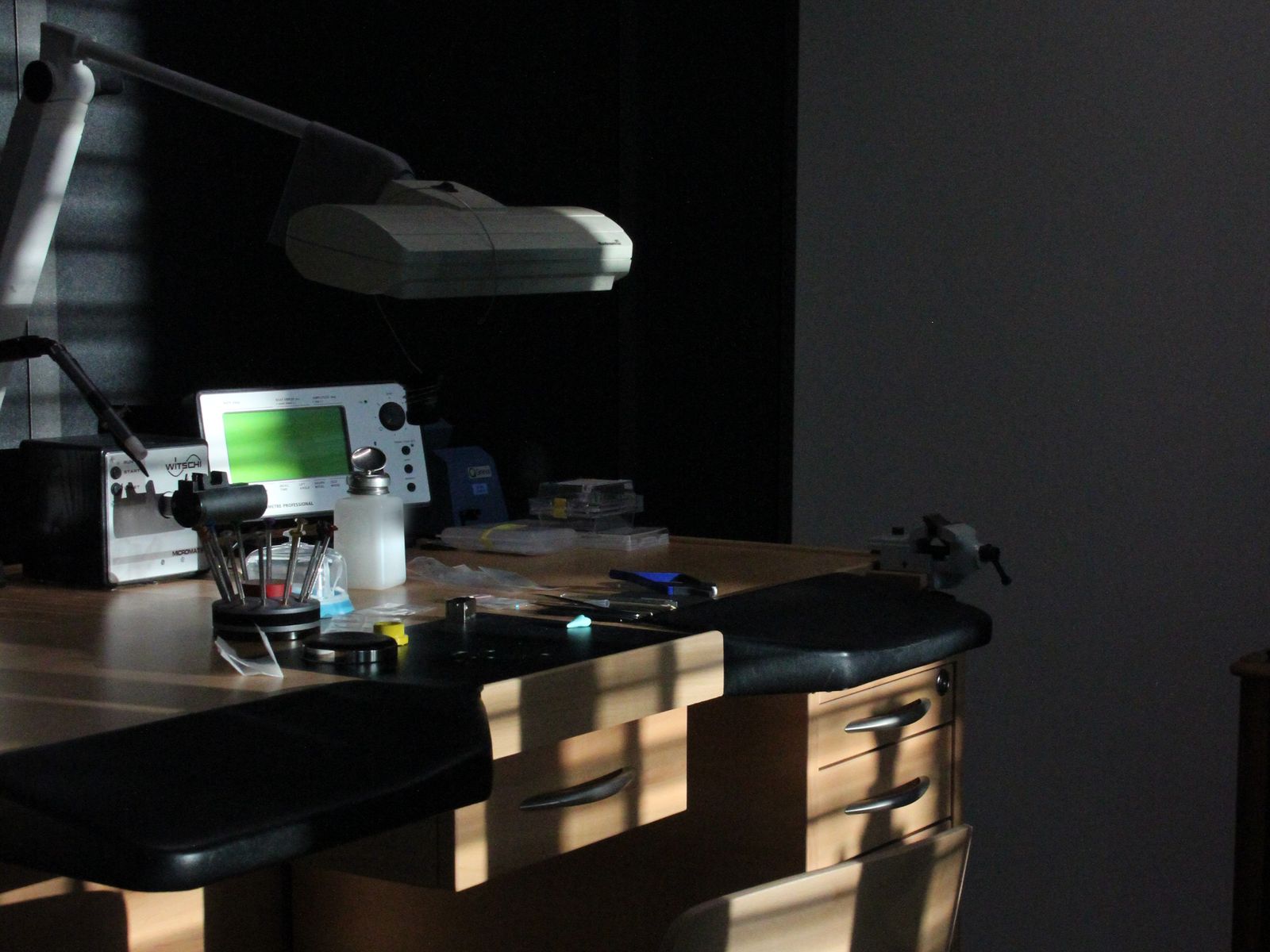
The series operations done in our workshop, from case assembly to final inspection, are described under watch subcontracting in Geneva.
Machining the case and its components
Machining is carried out by our partner workshops in Plan-les-Ouates. We order it from the dimensioned drawings and 3D files produced at the engineering stage, and we are answerable for it. Parts are checked on arrival in our workshop, before finishing.
Prototyping and Swiss made
For a mechanical Swiss made watch, the Ordinance on the Use of 'Switzerland' or 'Swiss' for Watches (SR 232.119, art. 1a(a)) requires at least the mechanical construction and the prototyping of the watch as a whole to be carried out in Switzerland. At CLD, engineering and prototype development are done in Plan-les-Ouates. The other conditions, not all of which depend on us, are explained on our page Swiss made, Geneva provenance and the Geneva Seal (Poinçon de Genève).
Frequently asked questions
Can you industrialise a watch designed elsewhere?
Yes. We take a brand’s design or drawings and make them manufacturable (dimensions, tolerances, water resistance), then we build the prototypes and industrialise the watch.
Who supplies the movement, dial and hands?
The suppliers we find for the project, or you, if you already have these components. Movement assembly, fitting the dial and hands, and casing are done in our workshop.
Is there a minimum quantity for the pre-series and the series?
For a project that includes machining, the quantity is set in the quotation. There is no minimum batch for operations carried out in our workshop.
How long does it take from prototype to series production?
The schedule is set in the quotation, phase by phase.
Is the project kept confidential?
Yes. We sign a non-disclosure agreement on request before any technical discussion, and no client brand is ever named.
Let's discuss
your project.
Tell us where your project stands: a sketch, technical drawings or a prototype to take further.
Chemin du Pré-Fleuri 15
1228 Plan-les-Ouates
Switzerland